Sunday, 14 July 2019

Ethics.... bridging the gap!

PRACTICE 2: Reflective entry 5: Discuss how ethical issues are being addressed while you are taking action
Image result for equity in the classroom
Technology in the Classroom 
To me, one of the greatest ethical issues has been around the "digital divide".
That leads us to the question of what is the digital divide, and does it still exist.  The short answer is yes.  This is not just about the 'haves and the have not's' but as Normone et al (2018) state it is about the "..knowledge, skills and dispositions of the individuals to use ICT".  The 20/20 trust (2014) quote William Michell from MIT as saying “Low-income communities may attract less investment in new telecommunications infrastructure, and in any case may lack populations with the education and motivation to take advantage of it… These places will experience the downside of the digital revolution".   This impacts the classroom.

My year 10 class has 4 students whose family do not let them use the computer at home.  This means that while they have access to their phones, this platform is not enough for them to be able to usefully connect to the information being presented and often they are not able to effectively use the technology,

Access to digital technologies is varied across our school.  Internet New Zealand (n.d) released a study that shows that 80% of us have access to the internet at home but 93% have access when you included a mobile device.  This surprised me as it is not what I am experiencing in the classroom.  I have also found that a mobile device, while a great starting point, is not able to effectively teach the content and students actually end up getting frustrated and switch off from the learning.
Chromebook, the next step??  Many of our students are now starting highschool having purchased chromebooks or similar at their contributing school.  However, there is another section that do not, these devices then become a target for theft and damage from having to transport then around, which renders them not usable and we are back to square one.

The next step is the introduction of chromebooks or similar at a faculty level.  We, as a school have tried to cater to this but with 8 overly booked classrooms and only 3 computer trolley's with 15 computers in each, we are still not meeting demands.  

The next step, introduce more collaborative tasks, which is what my action plan was based around.  However, then comes the problem of what about those students who are sick and can't contribute to their groups work. Is this then an ethical issue itself?  Can we use a system similar to what we use here at the mindlab where the students have to decide if everyone has done the same amount of work and deserves the same grade?  Then are the students completing work for a grade instead of for the understanding and development of critical thinking?  This all comes down to the ethos we develop in our students and what our expectations are.  

We are back to looking at RELATIONSHIPS!


Image result for student teacher relationships and critical thinking

Moving forward, the way we set up any inquiry and action plan must involve the students from the start.  This is becoming more and more clear throughout this process.  Give the students an idea of what you would like to see and keep everyone, including parents, informed through out to make sure everyone's needs and limitations are catered to.  When the students feel that the work is being done together and FOR they become engaged in the process and want to learn more.  This also, leads to a better understanding and ability to apply it in more than one situation, critical thinking!!!


References:

20/20 Trust, (2014) The Concept of the Digital Divide.  Computers in Homes. Retrieved from https://computersinhomes.nz/resources/research/concept-digital-divide/ 

Internet NZ (N.D) State of the internet 2017. Retrieved from https://internetnz.nz/sites/default/files/SOTI%20FINAL.pdf 

Normore, A. H., & Lahera, A. I. (Eds.). (2018). Crossing the Bridge of the Digital Divide: A Walk with Global Leaders. IAP. accessed from https://books.google.co.nz/books?hl=en&lr=&id=wyBzDwAAQBAJ&oi=fnd&pg=PR9&dq=crossing+the+bridge+of+the+digital+divide&ots=foNb4PNU7X&sig=58i5HbYaqHPOqoctWR8p6YKdMxk&redir_esc=y#v=onepage&q=crossing%20the%20bridge%20of%20the%20digital%20divide&f=false

Images:

Technology in the classroom. Retrieved from  https://i.pinimg.com/originals/af/3f/ac/af3fac1255bf57b1ce54e00158af57c8.gif 

Simpsons Education Retrieved from https://www.google.co.nz/imgres?imgurl=https%3A%2F%2Fcdn-images-1.medium.com%2Fmax%2F1600%2F1*vPrIHrIvfQvPax8UAoOx_g.gif&imgrefurl=https%3A%2F%2Fbrightthemag.com%2Fteaching-teachers-to-play-video-games-1370be64c5a8&docid=10w3kCeYgEVGAM&tbnid=eIeYAP8YWLhGJM%3A&vet=10ahUKEwjD39Hiwq7jAhULYo8KHVFKABEQMwg9KAAwAA..i&w=500&h=281&safe=active&bih=659&biw=1526&q=student%20teacher%20relationships%20and%20critical%20thinking&ved=0ahUKEwjD39Hiwq7jAhULYo8KHVFKABEQMwg9KAAwAA&iact=mrc&uact=8

Saturday, 22 June 2019

Reflection.........

PRACTICE 1: Reflective entry 4: Apply a reflective model to discuss something that has happened during your inquiry so far and how it impacts on taking action.

"Reflective practice has long been advocated in teacher education as a means to improve one’s awareness and effectiveness as a teacher."  Gibbs (2007, p91).

Before we can start the reflection process is it important that we look at what reflection actually looks like.  Finlay states that reflection involves "being self-aware and critically evaluating their own responses to practice situations. The point is to recapture practice experiences and mull them over critically in order to gain new understandings and so improve future practice. This is understood as part of the process of life-long learning." (2009. p1).  Life long learners is what the NZ Curriculum is trying to create.  This includes 21st Century Skills such a collaboration and critical thinking, aspects of our inquiry.


I have chosen to use Gibbs Reflective Learning Cycle as is aligns with the Teaching as Inquiry Model we use at WBHS. 
It shows that we have to be continually looking at what happens and the impact it has on everyone.  This is for both positive and negative events, and nothing happens the same way twice.

Step 1 (What): Describe something that is significant and has happened during your Inquiry so far.
Attempting to use the jigsaw method of peer teaching.  Well the Y10 class I had, was not ready for this.  
Education Perfect Results 1 2019


Education Perfect Results 2 2019

It can be seen from this small sample that the completion rate of the students varied.  This made it very difficult for the peer teaching section to be able to take place.  Some students in other groups had completed 100% of the work and yet other had completed 4%.  All had been present for the same amount of time, but it can also be seen that the time spent on it differed also.  There was little to no student agency, which was very disappointing.

Step 2 (So What): Evaluate the most interesting/important/useful aspects of this event
The lack of student agency surprised me.  Most of the students I have worked with in this way have really taken to having the ability to control what they are learning and at their own pace.  However, this has been in older students who are taking the subject by choice, and not as a requirement.  When looking at Gibbs model the analysis has to come from talking to the students.  I had prepared them for what was going to be happening but it was also something I told them they were going to be doing.  It was not a choice for them in the way I thought it would be.  How can I use this as a method of digital collaborative learning if they haven't gained the knowledge to teach others?


Step 3 (Now What): Analyse the implications from this event to the rest of your Inquiry
So what does this mean?  My task for digital, collaborative learning will need to change.  I will need to discuss with my students what aspects they found hard and how can we work together to overcome these.  This is an important part of the inquiry, the relationship building, and is something I/we have talked about in a number of our previous assignments.  Collaboration will not work, unless everyone is involved and can see the value in it.  This is what will help in improving the student agency and, hopefully, getting engagement in the inquiry.  


The issue of whether computers can replace teachers can, at the moment, be argued against, at this point. PHEW!!


References:
Finlay, L. (2009). Reflecting on reflective practice. Practice-based Professional Learning Centre, Open University. Retrieved from http://www.open.ac.uk/opencetl/sites/www.open.ac.uk.opencetl/files/files/ecms/web-content/Finlay-(2008)-Reflecting-on-reflective-practice-PBPL-paper-52.pdf


Gibbs, C. (2007). Reflections through Invisible Glass Walls: Self-Study of Teacher and Artist. Waikato Journal of Education13, 91–102. Retrieved from https://search.ebscohost.com/login.aspx?direct=true&db=ehh&AN=33979639&site=ehost-live

Images:
Education Perfect https://www.educationperfect.com/controlpanel/#/tasks

Gibbs' Reflective Learning Cycle  Retrieved from https://www.sheffield.ac.uk/ssid/301/study-skills/university-study/reflective-practice


Friday, 21 June 2019

Cultural Responsiveness

PRACTICE 1: Reflective entry 3: Examine how indigenous knowledge and cultural responsiveness are informing the way you are taking action.

Ford, Stuart & Vakil state that "In 21st century schools, it is crucial that teachers are prepared to meet the needs of an increasingly diverse population of students in their inclusive classrooms" (2014. p 61).  This is the case around the world.


WBHS Ethnic Breakdown 2019

What does this show, a variety of different cultures present in our school.  Within each of these categories, there is further break down.  It is important to take this into account with not only teaching, but also the inquiry process.  Keeping everyone informed of what is happening to make sure that we value their beliefs and cultures is a must.

As we stated in our research 2 assignment Our entire inquiry process is based around a kaupapa maori philosophy where students share in the learning experience and contribute towards the learning and acquisition of knowledge. This relates to Te Ao Maori, and the maori view of a community of learning. Not only in the classroom but through many cultural aspects of Maoritanga.

Ford et al also state that "Additionally, teachers need to understand the role of their own cultural background and how it intersects with that of their students. They can create a student-centered inclusive environment with culturally relevant materials, strategies, and curriculum that support learning as they meet students where they are, monitor and build scaffolds to mastery while differentiating instruction" (2014, p61)  My own experiences show me that everyone has their strengths and weakness, and that we need to work with these in the classroom as we do in life.  This is role modelling at its finest and helps to develop 21st century skills such as critical thinking.  

We need to bring in local experts in the area to help in our teaching practice.  Teachers do not know everything, and even if they do have the knowledge, using our community to assist in teaching and help in showing the value of education, is only going to enhance engagement and allow more students to make links and be able to think critically.

Part of the Ministry's Strategy and Vision: Ka Hikitia: Managing for Success identified that Maori students needs to see success as Maori.  This initiative is continually being built upon and refined but overall the message is Berrymen and Eley are trying to leave is that "If we, as educators, are to leave a legacy of more Māori students fashioning and leading our future, the need for the system to step up still remains".  What does this mean in our inquiry? 

Our inquiry question was Does digital collaboration with peers and the teacher, allow for critical thinking in Year 10 students? Are we being mindful of our target students and making sure we are ensuring our Maori students can see success as Maori? Part of this ensures that we have identified our Maori students from the start and incorporate their voice. At Year 10, where we have focused our inquiry, I see this as very important. The ethnic breakdown of senior classes in my teaching area becomes very one sided as we progress through the school. I see a need to break this down and this can be managed through inquiry.

Future Focus
I can see the continued development of this inquiry with a focus on cultural inclusiveness in the senior school. Watch this space.....


References
Ford, B. A., Stuart, D. H., & Vakil, S. (2014). Culturally Responsive Teaching in the 21st Century Inclusive Classroom. Journal of the International Association of Special Education15(2), 56–62. Retrieved from https://search.ebscohost.com/login.aspx?direct=true&db=ehh&AN=103600067&site=ehost-live 

Berryman, M., & Eley, E. (2017). Succeeding as māori: Māori students' views on our stepping up to the ka hikitia challenge. New Zealand Journal of Educational Studies, 52(1), 93-107. doi:http://dx.doi.org/10.1007/s40841-017-0076-1

Pictures
Kamar printout from Whangarei Boys' High School Data (June 2019)

Laws, Regulation and Policy

PRACTICE 1: Reflective entry 2: Discuss how aspects of law, regulations and/or policy impact on your teacher inquiry.
The Education Act and Curriculum (updated 2017)
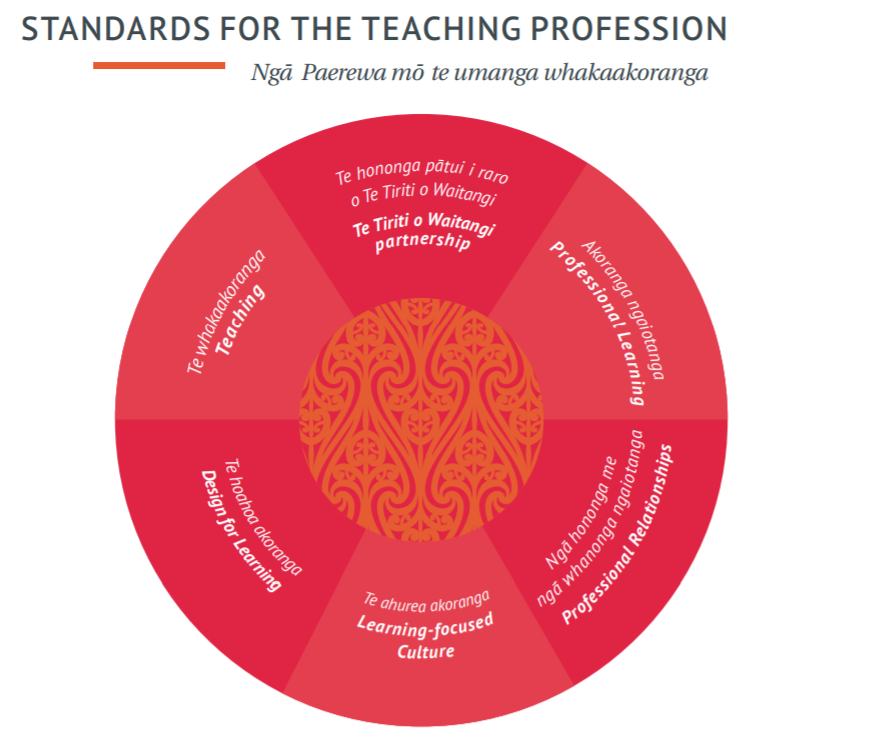
Professional Standards (2017)
So how does this impact on my inquiry??  What does it all mean??  Is this not just more educational talk when all I want to do is teach?

Surely the answer to all of this is simple, it is what we do naturally.  Or is it?  Each year we are continually gathering evidence for our portfolio.  This evidence needs to relate back to the framework that is provided above where we look at the Principle, Values and Key Competencies.  The 21st Century Skills where collaborative learning and critical thinking are so pivotal are part of this.  The formation of our goals for every year is based around the most recent iteration of the teaching standards which come out of this.  The ability to demonstrate these standards relates directly to the inquiry I am undertaking.

Teaching
This is the crux of what we are here for. To teach our students, not only content but also the ability to flourish in the wider world.  Proof of this lies not only in academic results, but also in our students abilities to interact with eachother; to collaborate.
Te Tiriti or Waitangi Partnership
New Zealand is unique in its cultural make up and as such our teaching needs to reflect this.  We need to look to our history and our communities to best support the learning of our students.  Throughout the inquiry process this needs to be accommodated.
Professional Learning
Using inquiry is a part of this standard.  Looking at collaborative problem solving another which is directly linked to what we are going as this inquiry is not being carried out in isolation.  Being able to share ideas and work together is a vital part of this.
Professional Relationships
Again, the inquiry including the research and collaboration relates directly to this.  We are engaging in reciprocal and collaborative learning-focused relationships.
Learning Focused Culture
The inquiry itself is learning focused.  We are looking at ensuring learning is happening in a way that is conducive to our learners and building capacity for other vital skills important in the 21st century.
Design for Learning
The subject specific knowledge required for our subjects is not the only aspect being taught.  The inquiry is using a specific context but we are looking at an overall pedagogical shift towards a new, and modern curriculum.

WBHS STRATEGIC PLAN

  • The strategic Plan for my school for 2019-2021 has 3 goals.  Two can be linked into this.    Creating a culture of belonging is vital in building relationships and being able to work with our students to see success.  Throughout this inquiry, there are many aspects that link into this.  Throughout the process we have to work in consultation with not only the students but the community that is effected by the inquiry.  
  • The creating equity goal states that there should be school while PLD sharing best practice.  What the inquiry is researching can be used to inform teaching and assist others who are teaching the same students.  An important aspect as many staff I have come across a cynical and can't see how research relates to them and their students.  This provides a way of overcoming this.


APPRAISAL
Teacher Appraisal also plays a role in the inquiry.  It is an expectation that part of our goals for each year, includes a Teaching as Inquiry.  The focus in this inquiry for me, is an extension of what i have been looking at in previous years.  I have not taken this as something completely separate, but something that I am already reflecting on in my teaching and would like to find newer and better ways of doing.  This inquiry is providing a platform for going further and making specific links to research.


References

Whangarei Boys' High School Board of Trustees (2018). 2019-2021 Strategic Plan.  Retreived from School Intranet.

Images

Ministry of Education (2017). The New Zealand Curriculum. Retrieved from

http://nzcurriculum.tki.org.nz/The-New-Zealand-Curriculum#collapsible12


Education Council (2017). Our Code, Our Standards. Retrieved from 

https://teachingcouncil.nz/sites/default/files/Our%20Code%20Our%20Standards%20web%20booklet%20FINAL.pdf

Audiences - who is it for??

PRACTICE 1: Reflective entry 1: Discuss how you are addressing the context of different audiences (local, national and/or international) and their perspectives for your inquiry.Image result for what are we teaching our students
Parker. P  (n.d) 

We are not just here to teach content.  I am forever trying to instill in my students, the need to understand that we are also teaching skills and how to develop meaningful relationships to ensure they are fully functioning members of society when they leave.  At secondary school, this is definitely the case.  Tony Wagner states "I see schools that are succeeding at making adequate yearly progress but failing our students. Increasingly, there is only one curriculum: test prep. "(p 24).
Through my inquiry I am looking at the 21 century skill of critical thinking which is one of the seven survival skills he talks about to be able to survive in the new working world.

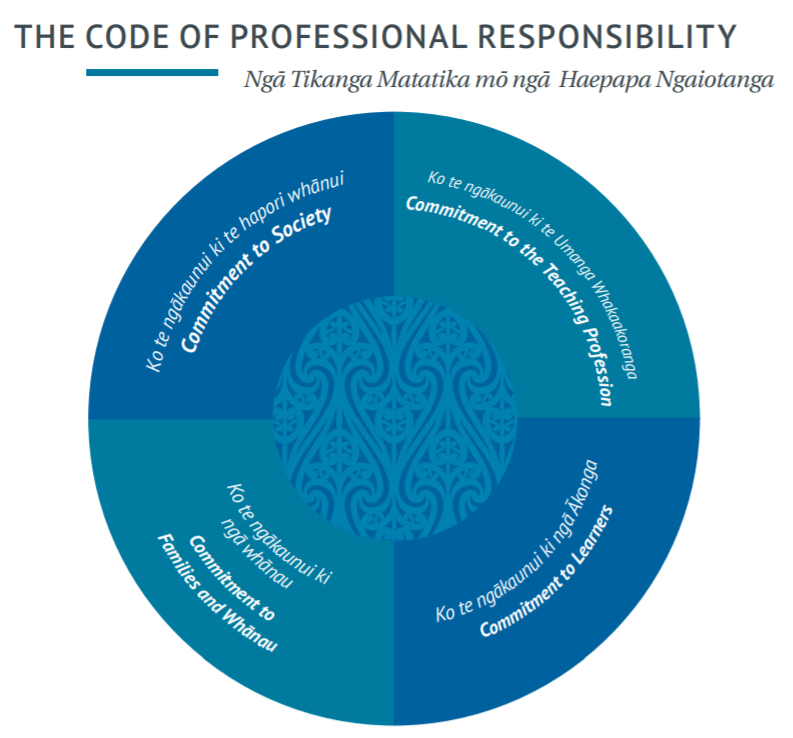
The Our Code, Our Standards, best summaries who the audience, we need to focus on, is:

Education Council (2017, p8)


  1. Learners/Akonga - what are they taking out of this?  How will it impact on them?  What does critical thinking actually mean to them and how do you teach it?  Year 10 students are notorious for being offtask and 'slacking around'.  This has been the case for a number of years, we have to look at addressing this so that they are equipped to head into NCEA and apply the content knowledge they do have to any scenaro they are given.
  2. Educators/Kaiako - many of the educators in my school have been teaching for a long time.  They have their ways of teaching that work for them.  BUT do they work for learners of today?  Through the use of the new teaching standards and our own inquiry, we hope to change this perspective and develop a growth mindset; in both other educators and the learners.
  3. Families/Whanau - There is a huge expectation on teachers to prepare learners for life after school.  Many of the whanau in our community have poor experiences of school which they pass on to their children.  This often is in conflict with being able to best prepare our students.  How do we overcome this?  Building relationships with our community, with a focus on the fact that it is culturally diverse plays an important role.  
  4. Local community - a large proportion of our student body do not leave and go off to university.  Therefore we have to look at our community to see what skills and knowledge they value to enable us to best prepare our learners.  This includes "fostering learners to be active participants in community life and engaged in issues important to the wellbeing of society", (Education Council, 2017, p 12).

Teach  Learn Reflection (2013)

Reflections
I would like to think I am continuously reflecting on my teaching.  Always looking to see what is working and what needs further development.  An essential part of this is building the relationships with both the learner and their whanau.  We all need to work together for a common goal that is not just about credit harvesting for the potential immediate return, more about what the learner is going to get of the experience in a holistic manner. This is backed by a NZ Curriculum that has a focus more on key competencies and the skill of learning rather than the content itself.  Alongside this sits the new Teaching Standards which in of themselves are more holistic and allow the teacher to work alongside the students in the learning process.  Through the inquiry model of both the teacher and the learner, we should continue to make progress towards developing the 21st century skills - in the case of my inquiry - Critical Thinking.


References
Education Council. (2017). Our code, our standards. Retrieved from 
https://educationcouncil.org.nz/sites/default/files/Our%20Code%20Our%20Standards%20web%20booklet%20FINAL.pdf
Wagner, T. (2008). Even our “best” schools are failing to prepare students for 21st-century careers and citizenship. Educational leadership. retreived from
 https://www.sisd.net/cms/lib/tx01001452/centricity/domain/22/rigor_redefined.pdf


Images

Education Council. (2017) The code of professional Responsibility retreived from
 https://educationcouncil.org.nz/sites/default/files/Our%20Code%20Our%20Standards%20web%20booklet%20FINAL.pdf

Teach Learn Reflection (2013) retrieved from
https://www.deviantart.com/shinryu76/art/Reflection-of-Education-382701139

Parker, P. (nd) Quote Fancy, retrieved from 
https://quotefancy.com/quote/1510381/Parker-J-Palmer-Whoever-our-students-may-be-whatever-the-subject-we-teach-ultimately-we 

Tuesday, 28 May 2019

Research 1 musings.....

Well that has gone by fast and there are so many different factors that have come into my thinking around all of this work.  I haven't posted in a while as I tend to work when I can and around the assignments gathering the relevant information.  Lets start with what i took out of the Research 1 assignment:

This was the introduction I wrote:
More and more teachers are using technologies in their classroom. These days you would be hard pressed to not find a classroom using some form of digital technology.  But the question then becomes could digital technology replace the teacher? When speaking to staff members at our school, it becomes apparent that there is a lot of programmes, both free and purchasable that offer the teaching of academic knowledge to students.  Many teachers are setting work from these programmes, putting a computer in front of the students and leaving them to it. The students themselves have indicated that this is great and they learn a lot but we are questioning whether it is developing critical thinking and the other 21st century skills that education should be?  

This is very close to home as it is definately what i see happening in classrooms around me. Teachers are becoming excited by the new resources they see online and are putting their students infront of them and leaving them to it. Another thing I see far too often is just scanning paper based resources and saving them as a digital copy with the impression they are now digital. However, they still can't be used in this way and often the quality of the copy is very poor. I struggle to see how that is going to improve the engagement of those students let alone develop more of the 21st century skills.

From the reading that we (LAW and MOR also) did for the research assignment we found 3 common themes that we highlighted. These were around:
Critical thinking and collaboration
Self efficacy in students and teachers &
Student teacher relationships and connections.

The overall message we took from these themes was as follows:
Through what we already know and the research carried out we know that the 21st century skills for learners are important.  Rather than focusing on all of them, we want to look at critical thinking and how the teaching of this can be better facilitated by us, as teachers.  The reading has shown that through collaboration we can look at achieving this, and that using the tools that the digital platform provides us with, we are able to enhance this further.
The continued development and innovation associated with integrating digital methods of teaching and learning provide many challenges for students and teachers. Research shows, as previously stated that one's self-efficacy can have a detrimental impact on the success of such approaches. There are clear links to building and enhancing self-efficacy through a collaborative approach to learning thus improving the effectiveness of digital initiatives in the classroom for teachers, Furthermore, the teachers ability and confidence whilst delivering such a method of learning can influence the effectiveness and future delivery. As identified by staff at our school, many teachers have low levels of confidence using technology, therefore influencing the level of success achieved in doing so.
It is also important for educators to find the right balance between connecting with students, and, connecting students with digital learning tools. In particular their ability to maintain and enhance teacher - student relationships through the use of technology. Supplementing a collaborative approach, connectivism in the classroom leads to the development of meaningful and thought provoking learning experiences. Thus allowing for conditions to support inquiry learning and the development of critical thinking skills.

Where to next.... that is the question and what the next assignment is on. How are we going to look into this further and answer the enquiry question of:


Does digital collaboration with peers and the teacher, allow for critical thinking in Year 10 students?

Tuesday, 12 March 2019

Week 13

DIGITAL

Games:

Flow experience and rule change.
Bigger the class the more the rules you can add.
No boredom

3rd World Farmer experiences:
Died
Feel the experience that others may do
Randomness without reason was frustrating/realistic
Playable, challenge, goal and feedback all required in a game

Common game elements
Socially game elements
Educationally game elements

According to Amory (2007), Educational computer games should:
  • Be relevant, explorative, emotive and engaging
  • Include complex challenges, puzzles or quests
  • Be gender-inclusive and non-confrontational
  • Provide appropriate role models
  • Develop democracy and social capital through dialogue
  • Support authentic learning activities
  • Support the construction of tacit knowledge
MeWe - the new google +

Pair Task - 1
Identify at least 5 different (real world) problem spaces you would like to work on with your students - what part of of this could be a game?
- Climate Change
- Genetic Engineering
- 1080 use
- Kauri Dieback
- Cloning your pet

- Genetic Engineering
Game could be a debate, puzzle, add parts organism to improve it, or not ......


Socialiser - interact with others
Free Spirit - autonomous
Achievers - desire to be competent at everything they do
Players - want extrinsic rewards
Disrupter - kick out of pushing the boundaries

Leadership
Gameification in leadership - is gamefying non game elements.
Freedom to:
Fail
Experiment
Assume different identities
Effort

Ensure not isolated by technolgy and not instantly rewarded.  Valid challenges for the school where max value can be obtained.

Fun theory - using a chore or similar and making it fun

Use Game Theory for TasI

Socialiser - students are taking ownership of their own learning through collaborative group work.  They are peer teaching.